Choosing appropriate court attire can be a source of confusion for many individuals facing a legal appearance. The clothing worn to court carries significant weight, as it shapes the first impression made on judges, juries, and legal professionals present in the courtroom.
The question of whether jeans are suitable for court appearances remains a frequent concern for men seeking to balance professionalism with comfort. Understanding when certain clothing choices are acceptable and how to present oneself properly in a legal setting helps ensure respect for the judicial process while avoiding potential negative consequences from inappropriate dress.
Key Takeaways
- Court attire significantly impacts the impression made on judges and other courtroom officials
- Jeans may be acceptable in certain court situations when styled appropriately with formal elements
- Professional alternatives to jeans are generally safer choices for most court appearances
Why Proper Courtroom Attire Matters
Appropriate dress in a courtroom demonstrates respect for the legal process and the gravity of the proceedings. Court environments demand formality because significant decisions affecting people’s lives occur within them. What someone wears sends a message about their attitude toward the case and the judicial system.
Key Considerations for Court Dress Code:
- Professional appearance shows seriousness about the proceedings
- Neat, well-maintained clothing reflects preparedness
- Respectful attire can positively influence perceptions
Following courtroom dress code guidelines affects how judges, attorneys, and others view an individual’s credibility. A person who appears put-together signals they understand the importance of their legal matter. While formal business attire may not always be mandatory, clean and appropriate clothing remains essential.
The impression created through proper courtroom attire can have lasting effects on case outcomes and how participants are regarded throughout legal proceedings.
Situations Where Jeans Might Work
Certain court settings operate with reduced formality, making jeans in court a possibility under specific conditions. The type of hearing and its associated atmosphere play key roles in determining appropriate attire.
Informal Proceedings
Small claims hearings, minor traffic violations, and uncontested family matters typically maintain a more relaxed environment. Wearing jeans to court in these scenarios may not raise concerns, provided the denim appears clean and undamaged.
Attendees should pair their jeans with appropriate upper garments such as:
- Button-down shirts
- Blazers
- Cardigans or sweaters
This combination maintains a respectful appearance while allowing practical comfort. The condition of the jeans matters significantly, as worn or distressed denim remains unsuitable regardless of the hearing type.
Youth-Related Proceedings
Court sessions involving minors generally operate with less stringent dress expectations. Family members and representatives attending these proceedings may find it okay to wear jeans to court, which is answered affirmatively in many jurisdictions.
Clean, well-maintained jeans paired with neat tops demonstrate appropriate respect for the setting. Avoiding disheveled or overly casual presentations remains essential even in these more lenient environments.
Styling Jeans for Court Appearances
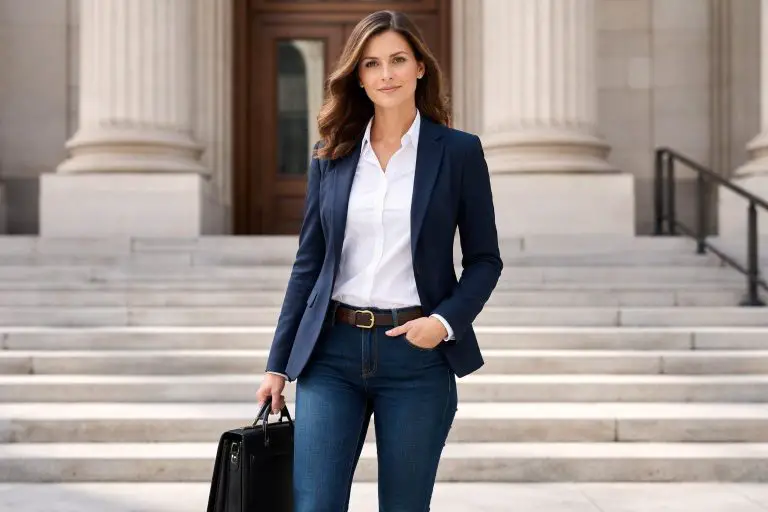
Select Dark-Colored, Properly-Fitted Denim
Dark denim presents a more refined and formal appearance when wearing jeans in court. Light-wash or ripped styles should be avoided entirely, as they appear too informal for legal proceedings.
The fit matters significantly. Jeans should be neither excessively loose nor uncomfortably tight, as both extremes undermine a professional presentation.
Combine With a Button-Up Shirt or Jacket
A pressed button-up shirt is necessary when wearing jeans in court settings. This addition brings formality to the outfit and counterbalances the inherently casual nature of denim.
Adding a jacket provides an even stronger professional impression. This extra layer transforms the overall appearance into something more suitable for legal environments.
Maintain Professional Footwear and Minimal Accessories
Footwear choices significantly impact the outfit’s professionalism. Athletic shoes and casual footwear should be replaced with dress shoes, loafers, or leather boots.
Accessories require restraint and simplicity. Bold or excessive jewelry detracts from a professional image, while understated watches and belts complement the outfit appropriately.
Recommended Footwear Options:
- Leather dress shoes
- Classic loafers
- Clean leather boots
Accessories to Avoid:
- Flashy jewelry
- Oversized watches
- Decorative belts
Options Beyond Jeans for Court Appearances
Dress Trousers or Business Pants
Dress trousers serve as standard professional attire and represent a reliable choice for court settings. They deliver a refined appearance without sacrificing comfort.
Recommended colors:
- Black
- Navy
- Gray
These neutral tones maintain a professional and understated presence. Combining these trousers with a button-up shirt, belt, and proper footwear creates an appropriate courtroom outfit.
Casual Dress Pants
For those seeking a less formal option while avoiding denim, casual dress pants offer an effective middle ground. These garments maintain a tailored and tidy appearance while providing a more relaxed aesthetic than traditional business trousers.
This style proves particularly versatile, adapting to different formality levels based on accompanying garments and accessories. The fabric typically features a softer finish than standard business pants.
Formal Suit or Sport Coat
Higher-stakes proceedings, including serious criminal matters or significant civil litigation, may warrant wearing a complete suit or incorporating a sport coat. Though not mandatory in every situation, formal attire conveys respect for judicial proceedings and can project seriousness and credibility.
When to consider this option:
- Major legal proceedings
- Trials requiring maximum formality
- Situations where personal credibility matters significantly
A sports coat paired with dress trousers provides a balanced alternative when a full suit seems excessive for the specific case. This combination maintains formality while offering slightly more flexibility in appearance.
Final Thoughts
Jeans typically fall short of appropriate courtroom attire, particularly in formal legal proceedings where dress pants or suits are expected. Certain informal court settings might permit clean, well-fitted jeans without tears or distressing.
Clothing choices communicate respect for the judicial system and the seriousness with which one approaches legal matters. Making a favorable impression requires thoughtful wardrobe decisions.
Key considerations include:
- Formality level of the specific court proceeding
- Condition and fit of the garment
- Potential perception by judges and court staff
Erring on the side of more formal attire prevents unintended displays of disrespect. When uncertain about dress code requirements, choosing business-appropriate clothing demonstrates proper regard for legal institutions.