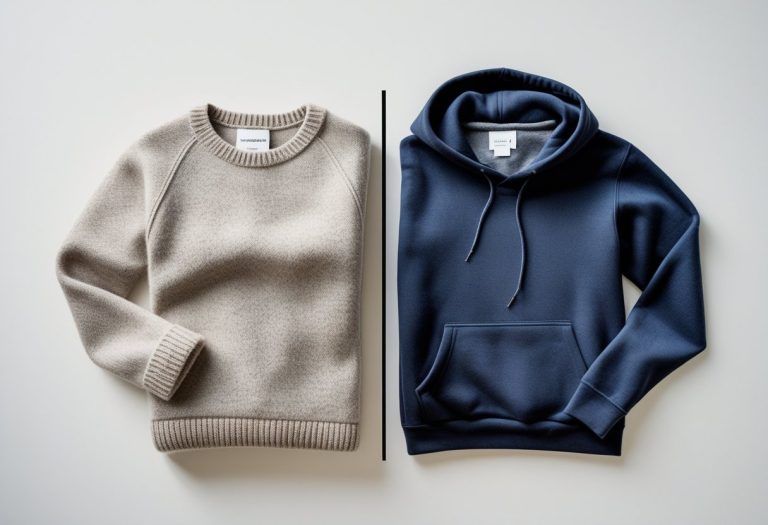
Choosing between a sweater and a hoodie may seem simple, but each offers distinct benefits in terms of comfort, style, and purpose. A sweater exudes a classic and polished look, while a hoodie conveys a casual and relaxed vibe. Knowing which one fits best depends on how it’s worn and where it’s used.
Both sweaters and hoodies have become everyday staples. They suit different moods, weather, and social settings. Understanding what sets them apart helps anyone dress better for the occasion without sacrificing ease or warmth.
Key Takeaways
- Sweaters create a clean and traditional appearance.
- Hoodies provide warmth with a casual, modern feel.
- Choosing between them depends on style needs and setting.
Sweater vs Hoodie: Key Differences and Features
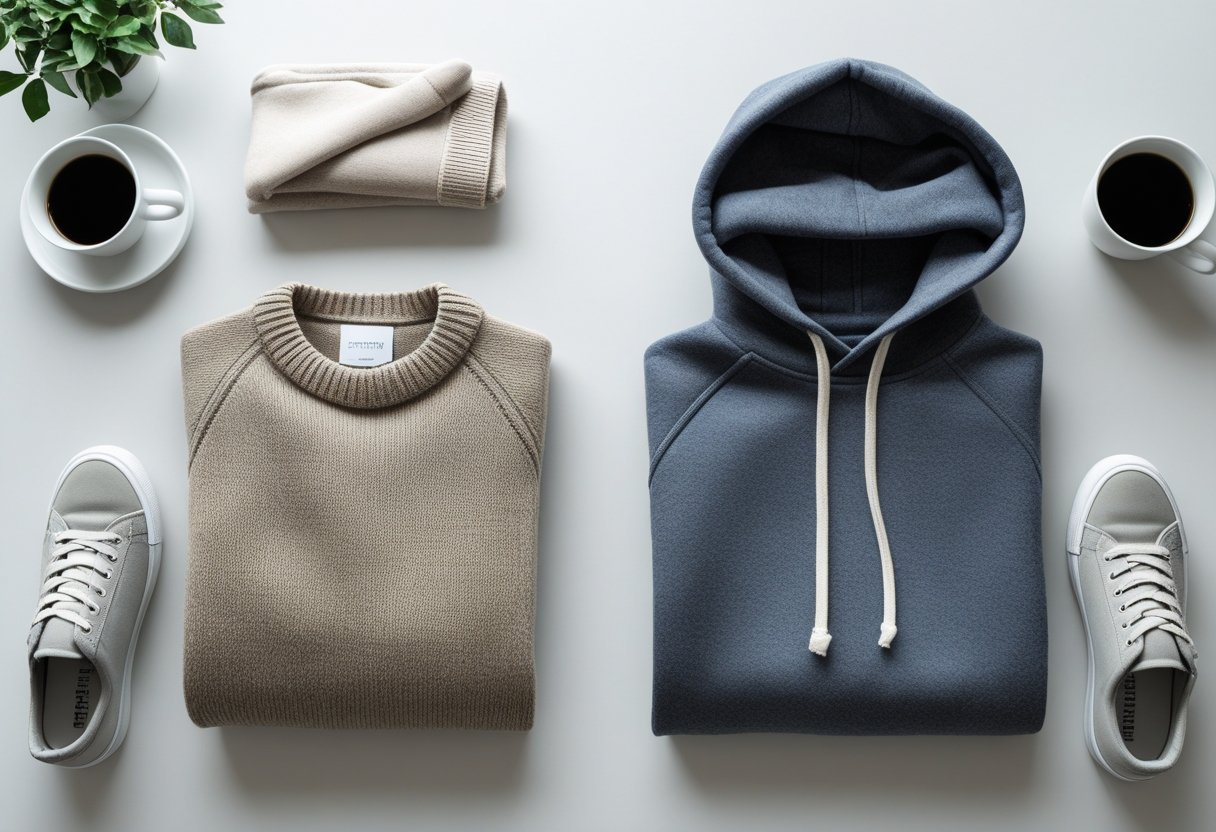
Sweaters and hoodies both provide warmth and casual comfort, but they differ in design, fabric, and purpose. Their distinct features influence how they feel, look, and fit into daily wear across different settings.
Design and Structure
A sweater is a knitted garment made from yarn, designed without a hood. It often features a crewneck, V-neck, or turtleneck collar. Sweaters come as pullovers or cardigans, the latter opening at the front with buttons or a zipper. The focus is on texture, fit, and layering potential.
A hoodie, by contrast, centers on function and casual style. It includes a hood—often with adjustable drawstrings—and a kangaroo pocket or two separate front pockets. Hoodies appear as pullovers or zip-up versions. The design promotes convenience and protection against mild weather.
While sweaters lean toward a polished or semi-formal look, hoodies suit relaxed or athletic outfits. The structure of each garment signals its main purpose: sweaters emphasize appearance and layering, while hoodies focus on practical warmth and comfort.
Materials and Fabric
Sweaters are usually made from wool, cotton, cashmere, or synthetic yarns. A cotton sweater feels light and breathable, while wool versions trap more heat. The knit can vary from fine and smooth to chunky and textured. These materials require care, often hand washing or gentle cycles, to maintain shape and softness.
Hoodies, on the other hand, are commonly cotton sweatshirts or cotton-polyester blends. Their fabric is thicker but smoother and less delicate than a knitted yarn. Inside, many feature a brushed fleece lining for extra softness. The material holds up well to frequent washing and resists stretching.
| Type | Common Fabric | Texture | Care Level |
|---|---|---|---|
| Sweater | Wool, cotton, acrylic, cashmere | Knitted, soft to thick | Medium to high |
| Hoodie | Cotton, polyester blend | Smooth or fleece-lined | Low to medium |
Fabric choice affects durability and comfort. Sweaters highlight craftsmanship and texture, while hoodies emphasize function and easy care.
Warmth and Comfort
Both sweaters and hoodies offer warmth, but they do so in different ways. A wool or cashmere sweater retains heat efficiently, making it suitable for colder environments. Its knitted structure allows some airflow, preventing overheating indoors.
A hoodie relies on its layered cotton fabric and hood coverage to keep users warm. The fleece lining in many sweatshirts creates soft insulation. Though not designed for extreme cold, hoodies pair easily with jackets for extra warmth.
In terms of comfort, hoodies often feel more relaxed. Their looser fit and flexible material allow free movement. Sweaters, depending on their knit and thickness, may fit snugly but maintain a clean look. Preference often depends on climate, lifestyle, and desired style.
Occasions and Use Cases
Sweaters adapt well to workplaces, classrooms, and semi-formal events. A fine-knit crewneck or cardigan layers neatly over a shirt or dress, presenting a tidy appearance. In colder weather, people wear heavier wool sweaters for outdoor activities or travel.
Hoodies fit naturally into casual and sporty settings. They suit exercise, lounging, errands, or layering during outdoor activities. A zip-up hoodie works well when quick adjustments for temperature changes are needed, while a pullover hoodie offers more warmth at the core.
Different designs fill distinct niches:
- Sweater: style-focused, structured, and versatile.
- Hoodie: relaxed, protective, and functional.
Each adapts to both comfort and activity, giving people options for different social and practical needs.
Style, Fashion, and Cultural Influence
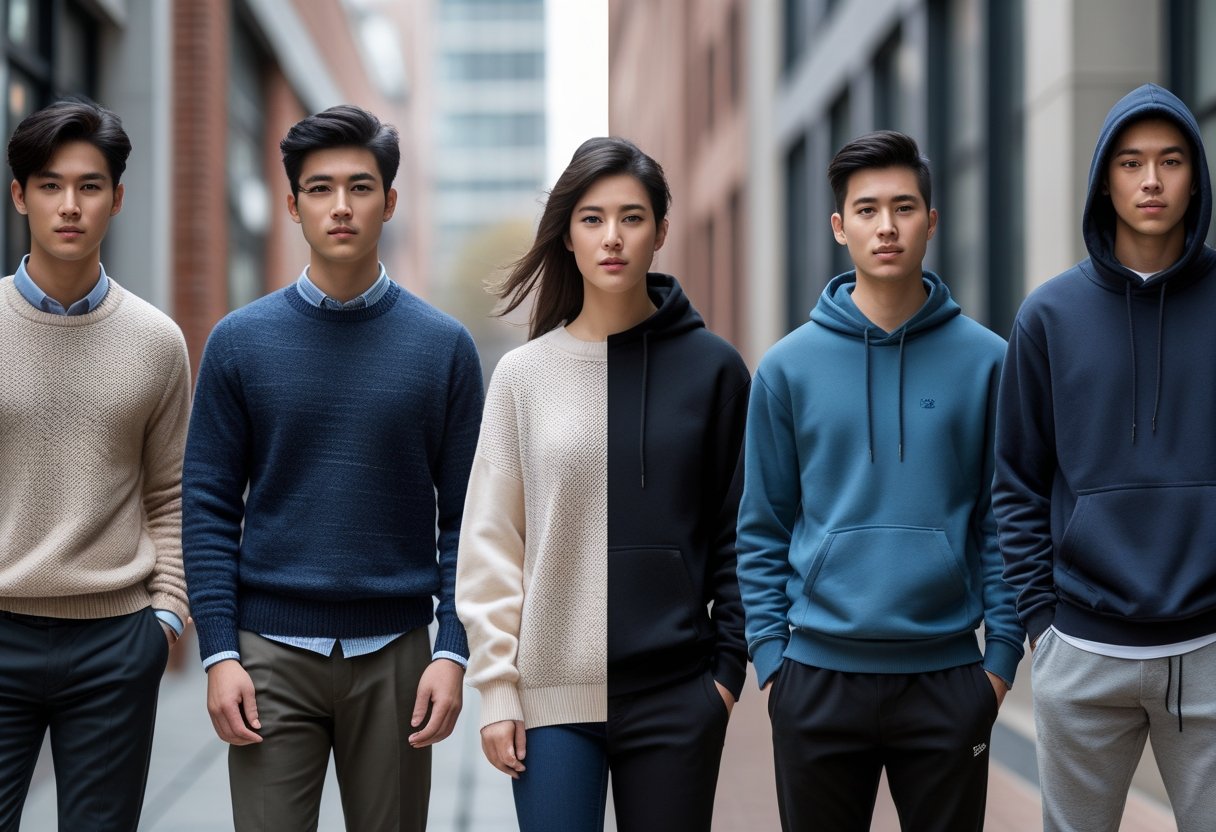
Sweaters and hoodies shape how people express comfort and style in daily life. Each piece reflects different settings, from high fashion to relaxed streetwear, while adapting to seasonal trends and cultural preferences.
Fashion Trends and Streetwear
Streetwear often blurs the line between casual and stylish. Hoodies have become a key item in this look, favored for their relaxed fit and urban appeal. The oversized hoodie gained popularity through skate and hip-hop influences, often paired with bomber jackets or sweatpants for a laid-back but intentional outfit.
Sweaters, while traditionally neater, also appear in streetwear. Chunky knits or patterned pullovers work well with jeans or cargo pants, giving structure to a casual outfit. The choice often depends on mood and setting—people wear hoodies for a sporty tone and sweaters when they want a cleaner, classic finish.
Many fashion brands fuse the two. They create hybrid pieces that mix sweatshirt materials with knit textures, showing how sweater vs hoodie is less about rivalry and more about versatility in modern style.
Athleisure and Everyday Outfits
The rise of athleisure made comfort central to daily fashion. Hoodies pair easily with leggings or track pants, blending athletic and casual looks. Their soft fabrics and easy fit make them practical for both workouts and errands.
Sweaters join this trend through lighter, breathable materials. Slim-fit designs allow movement while keeping a polished appearance. Neutral colors—gray, navy, and beige—fit well with the minimalist tone of athleisure wardrobes.
Some people use layering to balance comfort and form. For example:
| Look Type | Top Layer | Bottom Pairing | Style Note |
|---|---|---|---|
| Sporty | Hoodie | Joggers | Add sneakers for balance |
| Smart Casual | Sweater | Chinos | Works with clean sneakers or loafers |
This blend of performance and everyday wear shows how both garments stay relevant across work, home, and travel.
Winter Wardrobe Essentials
During cold months, sweaters and hoodies become foundation pieces. Wool and fleece provide warmth without heavy layering. A cable-knit or turtleneck sweater pairs well with coats and scarves, making it a core winter wardrobe item.
Hoodies offer flexibility under bomber jackets or parkas. People often wear an oversized hoodie for extra warmth or casual comfort. The hood itself adds coverage against cold wind, which makes it useful for outdoor wear.
Different climates shape preferences. In mild winters, cotton hoodies replace thicker knits; in colder areas, wool sweaters stay essential. Both blend function with personality, allowing individuals to adapt their fashion choices while staying warm and comfortable.
Frequently Asked Questions
Sweaters and hoodies share some similarities but differ in design, materials, and function. Each type fits certain styles, weather conditions, and care routines more effectively than the other.
What are the distinguishing features between sweaters and hoodies?
A sweater is usually a knitted garment without a hood, front opening, or pocket. It can have different neck styles like crew, v-neck, or turtleneck.
A hoodie includes a hood, a front pocket, and often a zipper or drawstring. It’s commonly made from sweatshirt material rather than knit fabric.
Can sweaters and hoodies both be considered casual wear?
Yes, both fit into casual dress codes. Many people wear them for comfort and versatility.
However, sweaters sometimes appear in semi-formal outfits, while hoodies are usually limited to leisure or athletic settings.
How does the material typically used for sweaters compare to that of hoodies?
Sweaters often use wool, cotton, or acrylic yarns that provide warmth and softness.
Hoodies mainly use cotton blends or fleece fabrics designed for comfort and easier washing.
What are the best use cases for wearing sweaters as opposed to hoodies?
Sweaters work well for cooler indoor settings, offices, or occasions requiring a neater look.
Hoodies are suitable for outdoor activities, exercise, or layering during cold weather.
The choice depends on the level of warmth and formality desired.
Are there significant differences in maintenance and care for sweaters versus hoodies?
Yes. Sweaters sometimes require hand washing or dry cleaning to prevent shrinking or pilling.
Hoodies can usually go through normal machine washing, making them more practical for frequent use.
How do fashion trends influence the popularity of sweaters and hoodies?
Fashion trends shift focus between minimalist knitwear and sporty streetwear styles.
Designers often update both garments with new materials, fits, and patterns to match seasonal demand.
Sweaters may trend during colder months, while hoodies stay popular year-round due to their comfort and casual appeal.