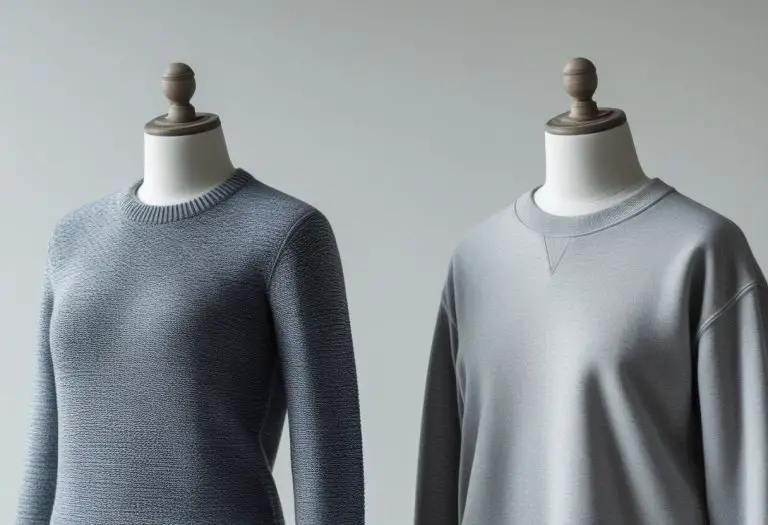
When the weather turns cool, many people reach for either a sweater or a sweatshirt without thinking much about the difference. Yet each one has unique qualities that suit different needs and styles. Compared to sweaters that are typically knit from wool or cotton yarn, a sweatshirt is made from thick, smooth fabric like fleece or jersey.
Knowing what sets them apart helps decide which one fits the moment—whether dressing up for a dinner out or keeping comfortable at home. Both offer warmth, but their look, texture, and purpose vary in simple, useful ways.
Understanding these details makes it easier to choose pieces that match the season and your wardrobe. The right pick can keep you warm while staying practical and stylish.
Key Takeaways
- Sweatshirts and sweaters have distinct materials and textures.
- Each works best for specific occasions and styles.
- Knowing their differences helps build versatility in the wardrobe.
Sweatshirt vs Sweater: Key Differences
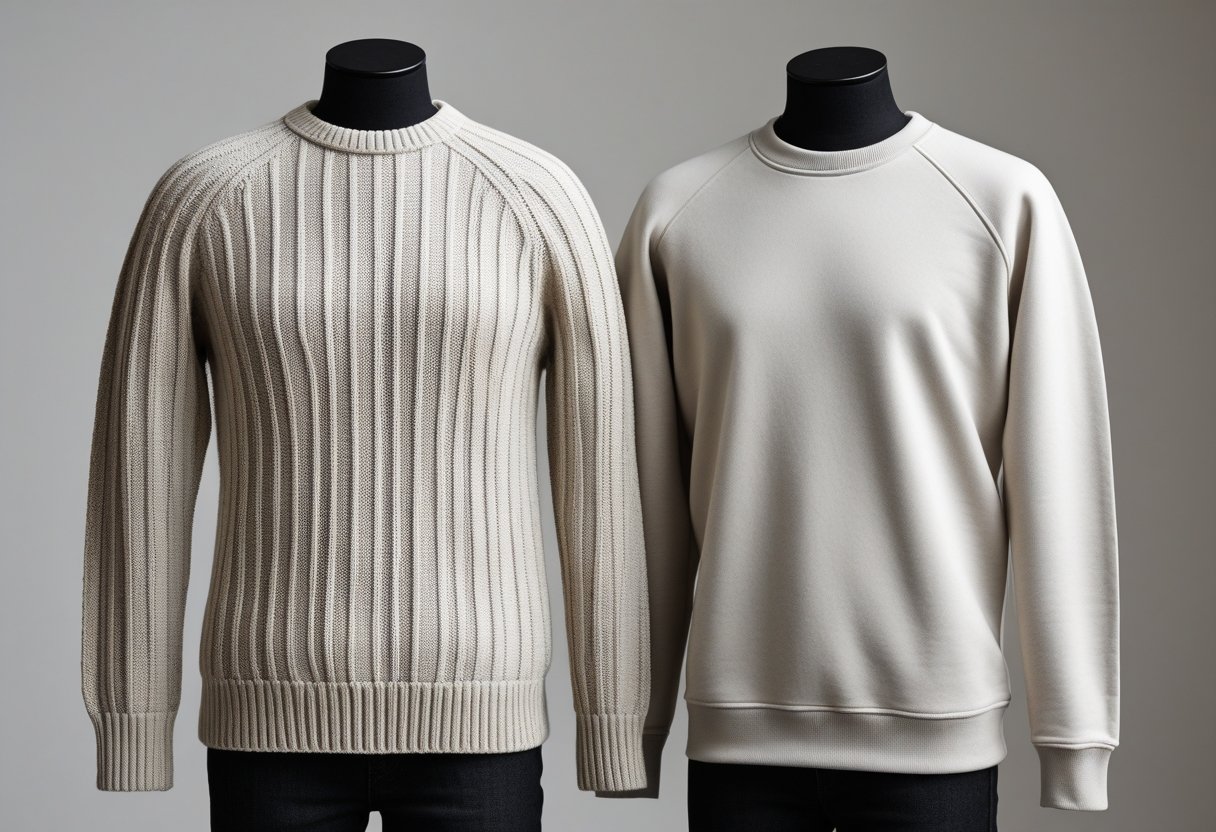
A sweater and a sweatshirt both serve as warm clothing, but they differ in fabric choice, construction method, and typical use. Each item suits specific weather conditions and occasions, balancing style and function in distinct ways.
Construction and Design Variations
A sweater is usually knit from materials such as wool, cotton, or synthetic fibers. It can feature different knit patterns, necklines, and closures, including round necks, V-necks, or buttoned cardigans. This variety makes it adaptable for both formal occasions and casual wear.
A sweatshirt, on the other hand, is typically sewn from cotton jersey or fleece-backed fabric. It has a smooth outer surface and a soft, brushed interior for comfort. The structure is thicker and more uniform than a knitted sweater.
| Feature | Sweater | Sweatshirt |
|---|---|---|
| Fabric | Knitted wool, cotton, or blends | Cotton or polyester fleece |
| Construction | Knitted | Sewn |
| Texture | Textured knit | Smooth surface |
| Style Range | Casual to formal | Mostly casual |
While a sweater often adds a polished look to an outfit, a sweatshirt focuses more on durability and a relaxed, loose fit suited for everyday or athletic wear.
Primary Intended Uses
People wear sweaters in cool or cold climates for warmth while maintaining a dressier appearance. They pair well with shirts, blouses, or even layered over dresses. Many choose sweaters for offices, dinners, or semi-formal settings because they convey a neat, refined image.
Sweatshirts fall under casual and athletic wear. They are common in sports, outdoor activities, and lounging. The material handles sweat and movement better than knitted garments. Hooded versions, or hoodies, add protection against wind and light rain.
Sweatshirts are usually easier to wash and maintain because their fabric resists shrinking and pilling. Sweaters need gentler care, especially those made from wool or cashmere. The difference in use often reflects the wearer’s priorities — warmth and style versus convenience.
Warmth, Comfort, and Style Factors
A wool sweater provides excellent insulation, holding body heat even when the temperature drops sharply. Natural fibers like wool also provide comfort and breathability, preventing overheating indoors. Lighter cotton sweaters work better in mild weather.
A sweatshirt offers soft comfort and consistent warmth due to its fleece lining. It feels cozy against the skin and retains and provides warmth without the weight of thick knits. However, it may trap heat more tightly and is less breathable than fine wool.
Sweaters often last longer if cared for properly, but sweatshirts tend to feel softer with repeated washings. Both offer comfort, but their warmth levels differ by material type, making each practical for specific conditions and personal preferences.
Material and Fabric Composition
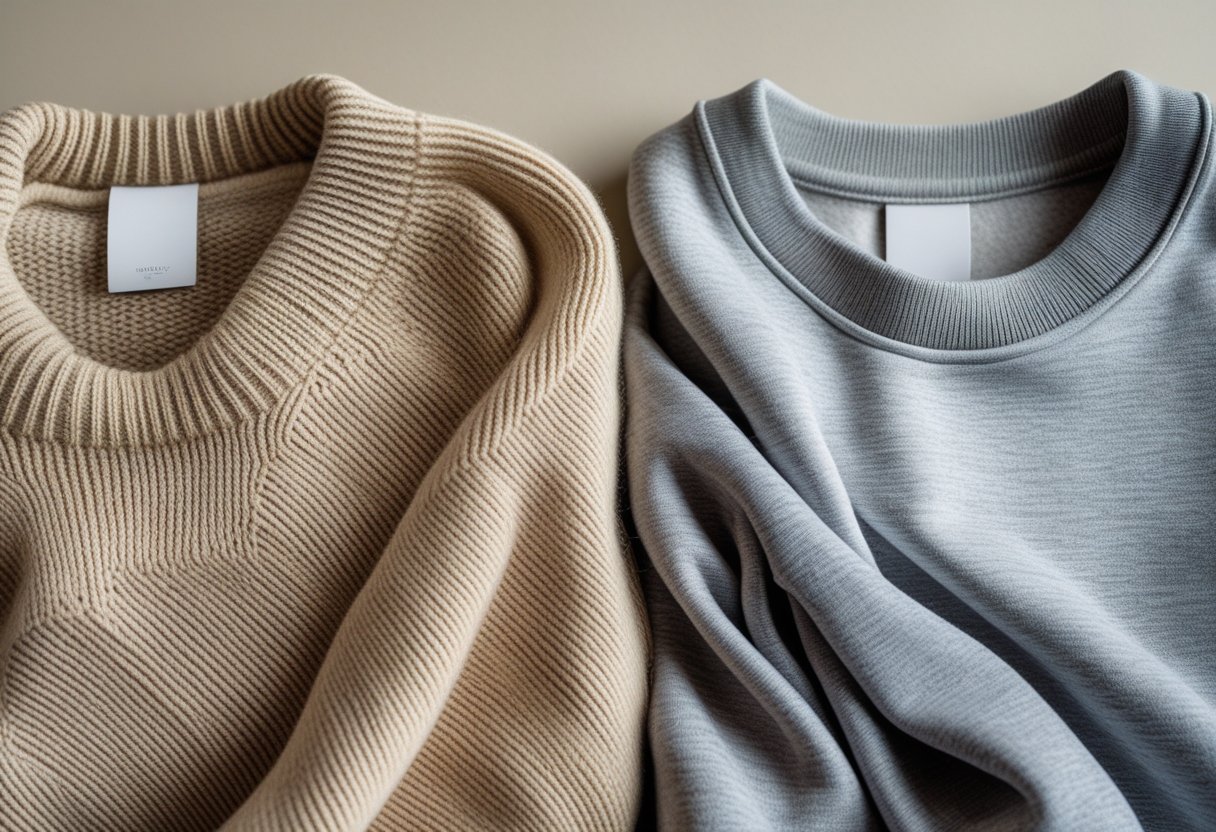
The type of fabric affects warmth, comfort, and durability. Sweaters and sweatshirts differ in fiber makeup, which changes how they feel, stretch, and perform after washing.
Natural Fibers: Wool, Cotton, and Cashmere
Natural fibers remain a standard in many sweaters. A sweater crafted from wool offers warmth and elasticity because wool fibers trap air and retain heat. Fine wool yarns like merino feel smoother and lighter than coarse wool.
A sweater crafted from cotton feels breathable and soft. Cotton fibers absorb moisture but dry slowly, making them suitable for moderate or cool weather rather than freezing temperatures. Many everyday sweaters rely on cotton-blend fabric to balance comfort and shape retention.
Cashmere sweaters use fibers from cashmere goats. The fibers are soft, light, and provide insulation with less bulk than wool. Cashmere requires careful washing to prevent pilling and shape loss. Some knitwear mixes cashmere with cotton or wool to lower cost and improve durability.
| Fiber | Key Properties | Best For |
|---|---|---|
| Wool | Warm, stretchy, moisture-wicking | Cold climates |
| Cotton | Soft, breathable, easy to care for | Mild weather |
| Cashmere | Luxurious feel, light warmth | Cool indoor or light outdoor use |
Blends and Synthetic Materials
Blended fabrics combine natural and man-made fibers to balance comfort and wear life. A cotton and polyester blend or synthetic blend gives a smoother finish and helps resist shrinking and wrinkles. Polyester adds durability and a faster drying time.
Polyester blends are common in cotton sweatshirts, making them easier to wash and less likely to lose shape. In contrast, pure cotton sweatshirts feel softer but may sag or fade after many washes.
Blends often improve affordability and performance without losing comfort. Some yarn mixes also add nylon or acrylic to reinforce fibers and prevent stretching. These materials can help both sweaters and sweatshirts hold their original fit longer, especially after frequent use or machine washing.
Fleece and Fleece Lining
Fleece fabric often appears in sweatshirts rather than sweaters. It is usually made from polyester fibers brushed to create a soft nap that traps heat. Fleece dries quickly and feels light, which makes it useful for active wear or mild winter days.
A fleece lining adds softness and insulation inside a cotton sweatshirt or polyester blend outer layer. This structure improves comfort without adding heavy weight. It also reduces the need for extra layers in cooler settings.
Fleece holds warmth well but can trap static and attract lint. Manufacturers sometimes combine fleece with cotton or nylon shells for better durability. While fleece lacks the natural texture of wool, it provides practical warmth at a lower cost and requires minimal care.
Popular Styles and Variations
Modern knitwear and casual tops feature many designs that blend comfort, warmth, and ease of wear. Each style differs in structure, neckline, and weight, which affects when and how people wear them. Materials and stitch types also shape how each garment looks and feels.
Sweaters: Pullovers, Cardigans, and Turtlenecks
Sweaters come in a range of forms, but three common designs—pullovers, cardigans, and turtlenecks—cover most daily use. Pullovers slip over the head and usually have no openings or fasteners. They work well for layering with shirts or blouses beneath.
A cardigan opens at the front, often with buttons or a zipper. People wear it for quick temperature changes or to show a shirt underneath. It pairs well with both casual and semi-formal outfits, making it a versatile option for indoor and outdoor wear.
Turtlenecks feature a tall, close-fitting collar that extends up the neck. This design provides extra warmth and suits colder weather. Many choose it for a clean, fitted look that layers neatly under coats or jackets.
| Sweater Type | Main Feature | Best Use |
|---|---|---|
| Pullover | No front opening | Everyday warmth |
| Cardigan | Front buttons or zipper | Layering and flexibility |
| Turtleneck | High neck coverage | Cold climates or formal layers |
Sweatshirts: Crewnecks, Hoodies, and More
Sweatshirts focus on warmth and softness rather than fine stitching. Typically made from cotton blends with fleece interiors, they balance sportswear comfort and casual fashion.
A crewneck sweatshirt has a round neckline with no collar or hood. It snugs smoothly around the neck and layers well over T-shirts. This simple shape makes it common in team wear and everyday casual outfits.
The hoodie adds a hood with drawstrings and often includes a front pocket. It offers extra protection during cooler weather and appeals to those who prefer relaxed, streetwear styles. Some versions feature zippers while others remain pullover designs.
Other sweatshirt styles include half-zip and quarter-zip designs, which allow more ventilation and a slightly dressier look. These options give users control over warmth and appearance.
Cable Knit and Other Distinctive Features
The cable knit design stands out for its textured, rope-like patterns created by crossing stitches. This style adds both warmth and visual detail, especially in thicker wool sweaters. Variations like honeycomb or basket weaves create different surface effects while keeping insulation strong.
Sweatshirts show fewer stitch variations but rely on fabric texture and finish instead. For example, brushed fleece creates a soft interior surface that traps heat. Smooth, double-knit materials offer a sleeker appearance suitable for minimal styles.
Other distinctive features include ribbed cuffs and hems that hold shape and reduce drafts. Whether in knit or fleece fabric, these touches help garments stay comfortable and durable through daily wear.
Usage, Occasions, and Modern Trends
These garments suit different settings and practical needs. Their design, material, and styling options shape how people wear them for comfort, warmth, and appearance across seasons and lifestyles.
Everyday Wear: Casual, Professional, and Athleisure
Sweaters and sweatshirts work in many daily settings, but their roles differ. A classic sweater often fits casual or business-casual outfits. It pairs well with collared shirts, chinos, or skirts for offices with flexible dress codes. Fine knits and neutral colors appear more polished and suitable for meetings or classes.
A sweatshirt, made from cotton or fleece, leans toward casual or athleisure wear. It combines well with leggings, joggers, or jeans and suits relaxed days, errands, or workouts. Many brands design sweatshirts with clean lines and subtle logos to make them acceptable in semi-casual public spaces or creative workplaces.
| Setting | Best Option | Typical Pairings |
|---|---|---|
| Casual | Sweatshirt | Jeans, leggings, sneakers |
| Professional | Sweater | Dress pants, collared shirts |
| Athleisure | Sweatshirt | Leggings, joggers, trainers |
Modern trends favor layering and mix fabrics to balance comfort and neat style, allowing both garments to bridge comfort with function.
Layering and Seasonal Considerations
Sweaters adapt better across seasons because of their fabric variety. Wool, cotton, and blends give different warmth levels, making them useful from fall to spring. Thicker knits trap heat, while lightweight cotton knits serve as breathable outerwear in mild weather.
Sweatshirts perform best in cooler months or athletic routines. Their fleece-lined interiors provide insulation, but the smooth outer fabric resists wind less than dense wool. Some newer versions use moisture-wicking materials, extending use to mild outdoor training.
Layering helps both pieces remain practical year-round. A sweater can go over a thin shirt or under a jacket. A classic style sweatshirt works well under a coat or over a tank top. This flexibility supports changing temperatures without compromising comfort.
Care and Maintenance Tips
Sweater maintenance depends on the fabric. Wool and cashmere need gentle washing or dry cleaning to avoid shrinkage. Cotton and acrylic sweaters can handle machine washing on a delicate cycle. Folding, not hanging, keeps the shape intact and prevents stretching at the shoulders.
Sweatshirts are typically crafted with lower maintenance. Machine wash cold is usually safe, though avoiding high heat helps maintain softness and fit. Turn them inside out before washing to protect prints or embroidery.
Storing both items in breathable containers reduces odor and fabric wear. Basic care routines extend their lifespan and preserve texture and color, making them dependable closet staples through repeated wear.
Frequently Asked Questions
Sweaters and sweatshirts differ in design, materials, and care needs. Each also suits specific situations and layering preferences depending on the level of warmth or style desired.
What distinguishes a sweater from a sweatshirt in terms of design?
A sweater usually features a knitted construction and may come with ribbed cuffs, hems, or collars. It often includes details like buttons, zippers, or patterns. A sweatshirt, on the other hand, has a smoother surface made from cotton or fleece fabric and tends to look more perfect for casual. It often includes a crewneck or hood and lacks decorative stitching.
Can you describe the main material differences between sweaters and sweatshirts?
Sweaters are mainly made from yarns such as wool, cotton, or synthetic fibers like acrylic. These fibers give them a textured, stretchy feel. Sweatshirts rely on fabrics like cotton fleece or polyester blends. The inner layer usually feels soft and brushed for warmth, while the outer side is smooth and sturdy.
What are the typical occasions for wearing sweaters versus sweatshirts?
People often wear sweaters in semi-formal or office settings because of their refined texture and tailored look. They pair easily with collared shirts or skirts. Sweatshirts suit relaxed environments such as at home, casual outings, or outdoor activities. They go well with jeans or athletic wear.
How do the care instructions vary between a sweater and a sweatshirt?
Sweaters usually require gentle washing by hand or on a delicate machine cycle. Some materials, such as wool, may need air drying to prevent shrinking. Sweatshirts can handle regular machine washing and tumble drying on low heat. Their fabric tends to be more durable under frequent laundering.
Are sweaters or sweatshirts more suitable for layering in fashion?
Sweaters layer well over shirts or under jackets because of their flexible knit design and slim fit options. They can also add texture to an outfit. Sweatshirts work best as outer layers or casual mid-layers during cooler weather. Their thicker fabric provides extra insulation without feeling heavy.